
septoplasty, surgery of the nasal septum
What is septoplasty?
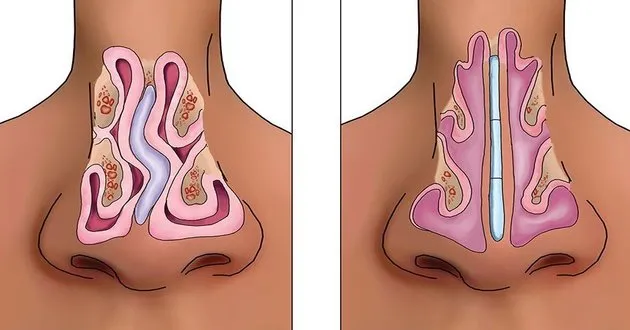
Septoplasty is a surgical procedure that straightens the bone and cartilage dividing the space between the two nostrils (the septum). A deviated septum can make breathing through the nose difficult and increase the risk of sinus infection because of poor ventilation, as well as cause other associated ear problems. Septoplasty repositions the nasal septum in the midline of the nose. This may require your surgeon to cut and remove parts of the nasal septum before returning them to the correct position. After undergoing septoplasty, breathing will most likely become easier for you
Reasons for having a septoplasty
A deviated septum is common, but other chronic ear problems may also make septoplasty necessary. When the problem is severe, a deviated nasal septum can block one side of the nose and reduce airflow, causing difficulty breathing through one or both sides of the nose. Septoplasty corrects the nasal septum by straightening, trimming, repositioning and replacing cartilage or bone, and in some cases by replacing both.
If you have symptoms such as difficulty breathing through the nose that affect your quality of life, consider this operation to improve your quality of life and correct your deviated septum.
Possible risks of the operation
As with most frequently performed operations, septoplasty carries its own risks. These include risks such as bleeding, infection and side effects of anaesthesia, as well as:
- -Nasal obstruction or similar issues that do not resolve
- -Nosebleeds
- -A change in the shape of the nose
- -Perforation of the septum
- -A reduced sense of smell
- -A blood clot in the nasal area that has to be drained
- -Temporary numbness in the upper tissues, the teeth or the nose
You may need additional surgery to treat some of these complications. You may also need additional surgery if the result of the septoplasty does not meet your expectations. Speak with your doctor about the specific risks before the operation.
Anaesthesia during the operation
The procedure can be carried out under local or general anaesthesia. Sometimes sedation may be used in addition to local anaesthesia. Which anaesthesia is used depends on the complexity of your operation. Discuss with your doctor in advance which type of anaesthesia is best for you.
During the operation, the incision is closed with an absorbable suture. Soft silicone splints may be placed in both nostrils to support the septum. To prevent bleeding after the operation, your doctor may place gauze in the nose.
After the operation you will be taken to the recovery room, where the staff monitor you and watch for any complications. You will most likely be able to go home the same day or the following day. However, you will need someone to help you or to take you home.
Recovery after the operation
To further reduce the risk of bleeding and swelling, your doctor may ask you to follow certain precautions for several weeks after the operation. Depending on the complexity of your operation, your doctor may ask you to:
Avoid strenuous activities such as gym workouts and running for up to five weeks, so that you do not potentially trigger nosebleeds.
Keep your head elevated while sleeping.
Do not blow your nose for several weeks.
Wear clothing that fastens at the front
Do not pull clothing such as shirts or jumpers over your head.