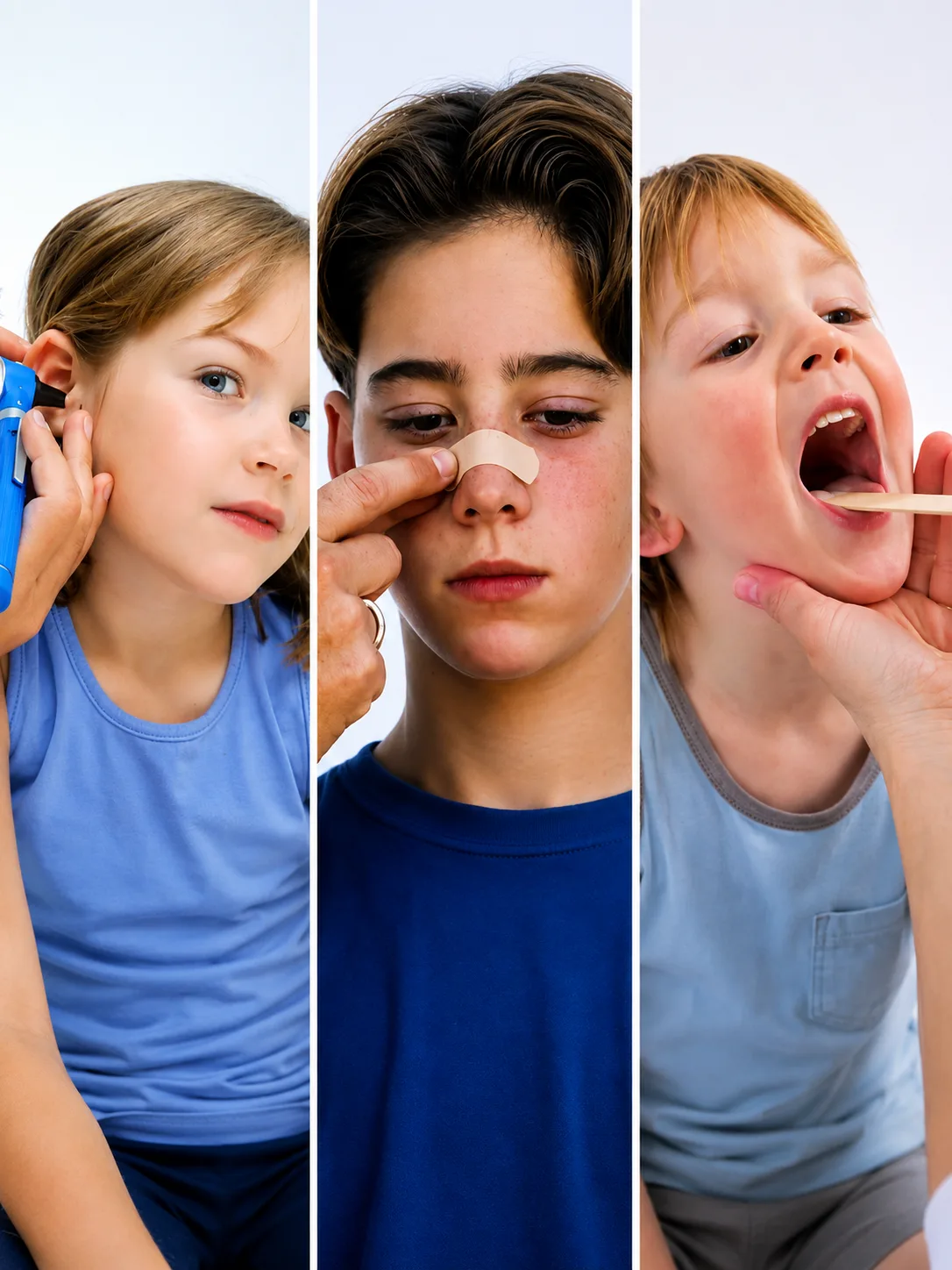
Ear infections
Ear infections are among the most frequent reasons why children are seen by an ENT specialist. They may affect the outer ear, the middle ear or, more rarely, the deeper structures of the ear.
The most common symptoms include:
- Earache
- Fever
- Irritability and restlessness
- The child pulling at the ear
- Sleep problems
- Reduced hearing
Recurrent infections can lead to fluid building up in the middle ear and temporary hearing loss. Early diagnosis is important in order to prevent long-term complications.
Hearing loss
Hearing plays a key role in the development of speech, communication and learning in children.
Warning signs may include:
- No reaction to sounds
- Delayed speech development
- Difficulty following instructions
- Turning up the television volume
- Difficulties at school
Our clinic performs modern audiology tests to identify any form of hearing loss at an early stage.
Perforated eardrum
The eardrum can perforate as a result of infection, injury or sudden changes in pressure.
Symptoms may include:
- Sudden pain
- Discharge from the ear
- Hearing loss
- Noise in the ear
Most small perforations close on their own, while larger ones may require surgical treatment.
Recurrent sore throat
Frequent sore throats can significantly affect a child's quality of life and performance at school.
The most common causes are:
- Viral infections
- Bacterial infections
- Inflamed tonsils
- Allergies
- Gastro-oesophageal reflux
An ENT assessment helps to identify the cause and determine the most appropriate treatment.
Tonsil infections
The tonsils are part of the body's defence system, but they can often become infected.
Symptoms include:
- Fever
- Pain on swallowing
- Mouth breathing
- Bad breath
- Enlarged lymph nodes in the neck
When infections recur frequently or cause breathing problems, surgical removal of the tonsils may be recommended.
Sleep apnoea and snoring
Persistent snoring in children should not be regarded as normal. Obstructive sleep apnoea occurs when the airway becomes partially or completely blocked during sleep.
Signs include:
- Loud snoring
- Pauses in breathing during the night
- Restless sleep
- Daytime tiredness
- Difficulty concentrating
The most common cause is enlarged tonsils and adenoids.
Sinusitis
Sinusitis is an inflammation of the paranasal sinuses, which may develop after a respiratory infection or as a result of allergies.
Typical symptoms are:
- Blocked nose
- Thick nasal discharge
- Prolonged cough
- Facial pain
- Bad breath
Treatment depends on the cause and on how long the symptoms have been present.
Runny and blocked nose
A chronically blocked nose is a frequent problem in children.
Causes may include:
- Viral infections
- Allergies
- Enlarged adenoids
- Sinusitis
- Anatomical deviations
Constant mouth breathing can affect a child's sleep and overall development.
Nosebleeds
Epistaxis is very common in childhood.
The most frequent causes are:
- Dry air
- Injury from nose picking
- Infections
- Allergies
Most cases are harmless, but recurrent nosebleeds require a specialist assessment.
Nasal fractures
Sports injuries, falls and accidents can cause fractures of the nose.
Signs include:
- Swelling
- Pain
- Deformity of the nose
- Difficulty breathing
Early diagnosis allows optimal treatment and reduces the risk of permanent deformity.
Foreign bodies in the nose and ear
Children often place small objects into the nose or ear while playing.
This can cause:
- Pain
- Discharge
- Unpleasant odour
- Hearing loss
- Local irritation
Removal should be carried out by trained staff in order to avoid further damage.
Tongue tie
Tongue tie is a congenital condition in which movement of the tongue is restricted by the lingual frenulum.
It may cause:
- Difficulty with breastfeeding
- Problems pronouncing certain sounds
- Limited mobility of the tongue
In certain cases, a frenotomy or frenuloplasty may be recommended.
Neck lumps
Lumps or swellings in the neck are a common reason for consultation in paediatric ENT.
They may be:
- Enlarged lymph nodes
- Congenital cysts
- Inflammation
- Benign growths
- More rarely, serious conditions
A specialist assessment helps to determine the cause and whether further investigations or treatment are needed.