
Aesthetic and functional nose surgery
Rhinoplasty
Nose surgery, or rhinoplasty, is sometimes referred to as “nose reconstruction”. It can improve the appearance of your nose and its proportion to your face, or treat associated breathing problems through the nose.
- 1–2hours for the procedurein some cases it may take longer
- 10days until the cast is removedthe nasal packing is removed on the fifth day
- 2–3weeks before appearing in publicfollowing our staff’s instructions on limiting activity
Nasal aesthetics
Rhinoplasty is a surgical procedure aimed at creating a nose that is in harmony with the other features of the face. The nose, also known as the nasal pyramid, is the most prominent part of the face and, besides its functional importance, it also has a particular aesthetic significance. The aesthetic appearance of the face depends largely on its shape, size and any deformities.
What rhinoplasty can correct
The basics: rhinoplasty may involve
- Relieving certain breathing problems
- Reshaping or altering the nasal tip
- Reducing the nasal dorsum (hump)
- Narrowing the nose by means of osteotomies, or narrowing the nostrils
- Final correction of minor deformities
- Reducing or increasing the size of the nose
- Changing the angle between the nose and the upper lip
- Correcting a birth defect or an injury
How the procedure is performed
Rhinoplasty is a surgical operation intended to correct or change the structure of the nose. This alteration of the nasal framework, of the bone and cartilage structures, makes the nose more compatible with the other structures of the face.
-
Local or general anaesthesia
It is an operation that can be carried out under local or general anaesthesia, depending on the exact procedures involved or on the patient’s preferences. Complex procedures may require a short hospital stay. The procedure takes about 1–2 hours, but in some cases it may take longer.
Medications are administered for your comfort during the surgical procedure. The options include intravenous sedation or general anaesthesia. Your doctor will recommend the best choice for you.
-
The incision
The surgical procedure is usually performed through an incision made inside the nose. In some cases, the incision may be made outside, around the base of the nose. This type of incision is used to work on or refine the nasal tip, or to harvest cartilage.
Rhinoplasty is performed either using a closed procedure, where the incisions are hidden inside the nose, or an open procedure, where an incision is made across the columella, the narrow strip of tissue that separates the nostrils. Through these incisions, the skin covering the nasal bones and cartilage is gently lifted, allowing access to reshape the structure of the nose.
-
Reshaping the structure of the nose
An overly large nose can be reduced by removing bone or cartilage. Sometimes nose surgery may require the addition of cartilage grafts. Most often, cartilage from the septum, the partition in the middle of the nose, is used for this purpose. Occasionally, cartilage from the ear or, rarely, a piece of rib cartilage may be used.
-
Correcting a deviated septum
If the septum is deviated, it can be straightened, together with the projections inside the nose, in order to improve breathing.
-
Closing the incision
Once the underlying structure of the nose has been sculpted into the desired shape, the nasal skin and tissue are redraped and the incisions are closed. Additional incisions may be placed in the natural creases of the nostrils to alter their size.
-
The cast, the packing and the result
When the surgical operation is completed, a cast is applied on the outside, which helps to maintain the new shape of the bones, along with nasal packing (placing dressings inside the nostrils), which serves to keep the septum stable.
The nose will be dressed to support it during healing. The initial swelling will take several weeks to subside completely, and the appearance of your nose will change gradually as it heals fully.
After the operation
From the first hours to returning to everyday life.
-
The first hours
In the first hours after the operation, ice is applied on and around the nose in order to prevent swelling of the face. A few hours after the operation the patient may go home, and the doctor prescribes the appropriate medication.
-
Day 5
The nasal packing is removed on the fifth day after the operation.
-
Day 10
The cast is removed on the tenth day after the operation.
-
2–3 weeks
The patient can appear in public 2–3 weeks after the operation. It is essential to follow the instructions on limiting activity after the procedure, which are provided by our staff.
Rhinoplasty is one of the most demanding of all aesthetic operations, because no two procedures are ever the same.
Every nasal configuration requires individual surgical planning and reconstruction. As a result, there is no single technique, but several techniques, which the surgeon must know in advance because of the different anatomical variations.
Results
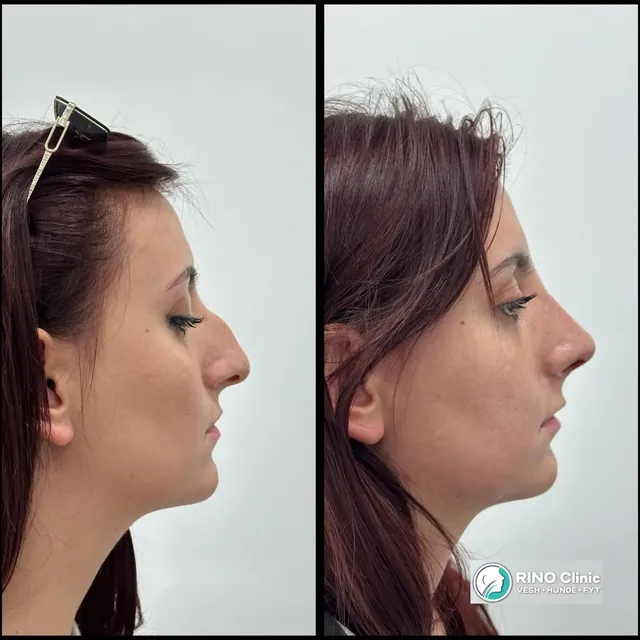
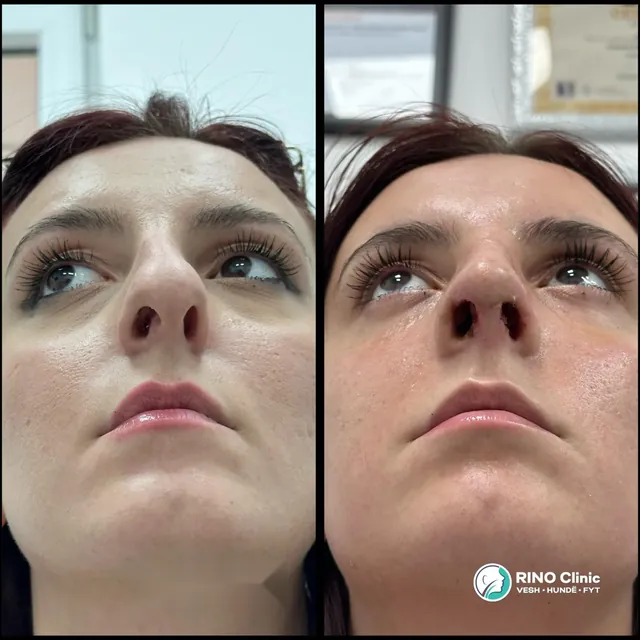
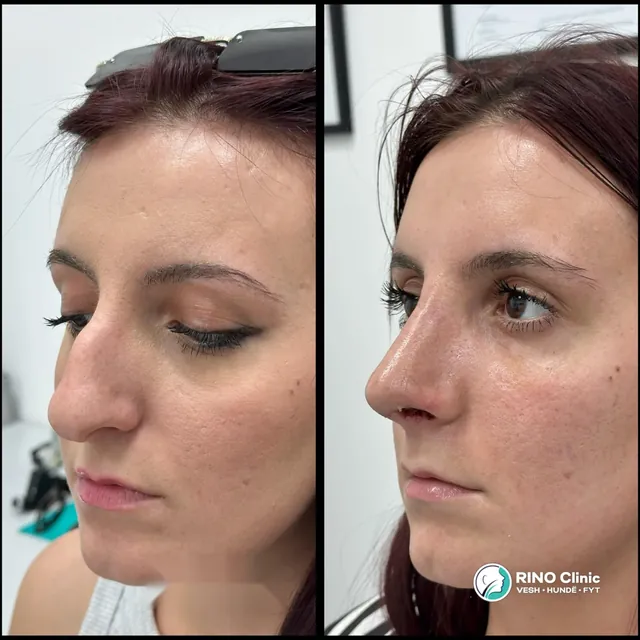
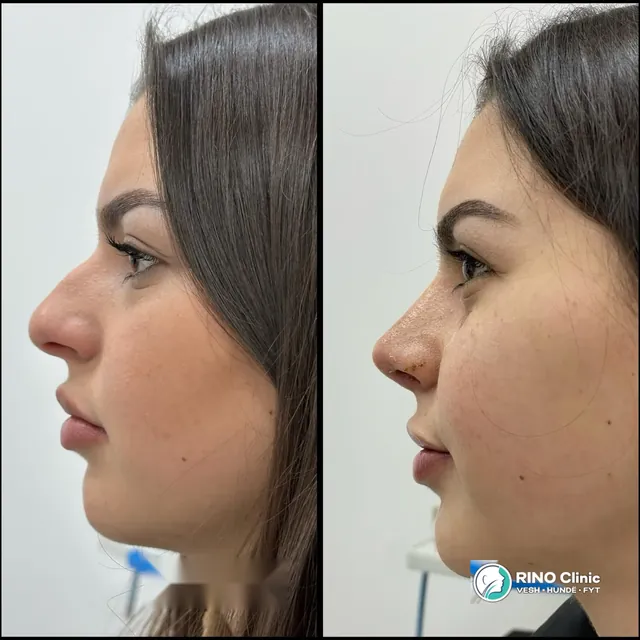
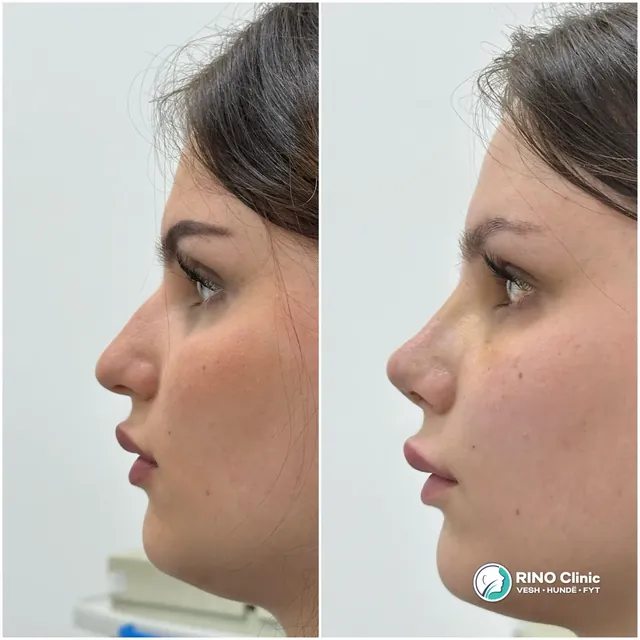
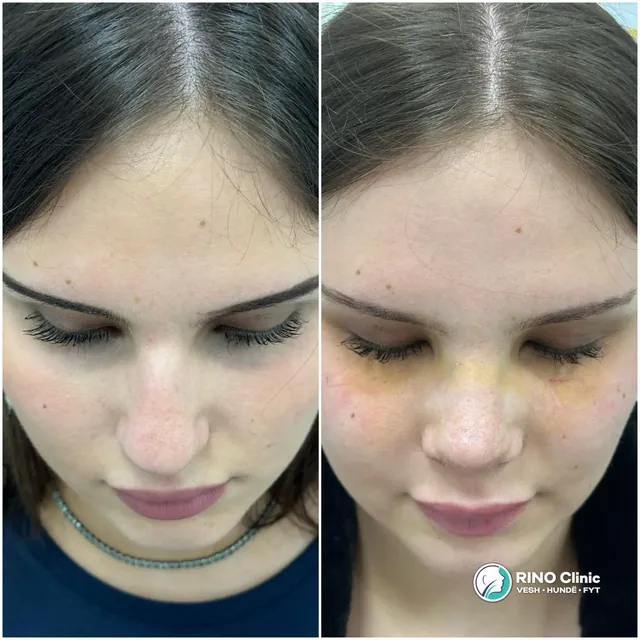
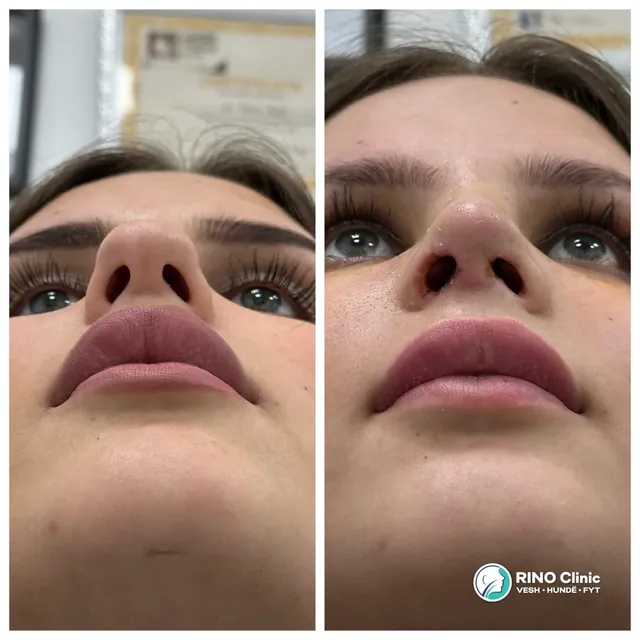
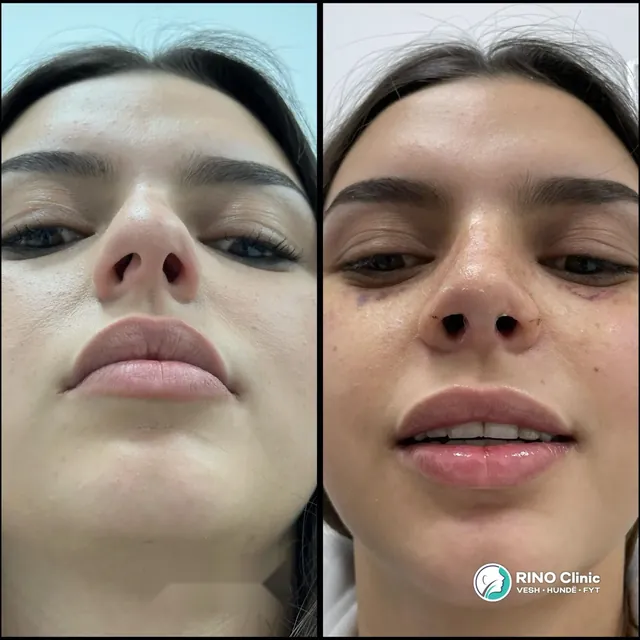
Rhinoplasty cases performed at RINO Clinic: on the left before, on the right after the procedure.
Instructions, facts and risks
The specific instructions you will receive cover:
- What you should do on the day of surgery
- The use of anaesthesia during the procedure
- Aftercare following the operation
The facts
The decision to undergo nose surgery is an extremely personal one, and you need to decide whether the possible risks and complications are acceptable to you. The surgeon or a member of the staff will explain in detail a number of risks associated with the surgical procedure.
Your questions
It is very important to ask the plastic surgeon questions about your procedure. It is natural to feel some concern about the change you are about to undergo, or stress before the operation. Do not feel embarrassed to talk about your feelings with your plastic surgeon.
The risks
- Risks of anaesthesia
- Change in skin sensation (numbness or pain)
- Difficulty breathing
- Infection
- Perforation of the nasal septum (a hole in the nasal septum) is rare. Additional surgical treatment may be needed to repair the septum, but it may be impossible to correct this complication
- Poor wound healing or scarring
- The possibility of revision surgery
- Skin discolouration and swelling
- An unsatisfactory appearance of the nose
Would you like a rhinoplasty consultation?
Book an appointment or call us: Monday to Friday 10:00–18:00, Saturday 9:00–12:00. Are you coming from Germany, Switzerland or Austria? See how treatment is organised for patients from abroad.