
Acute otitis media (AOM) is a sudden infection and inflammation of the middle ear, occurring mainly in children, although adults can be affected as well. It is one of the most frequent reasons for paediatric consultations and for antibiotic use in childhood.
What is the middle ear and why does it become infected?
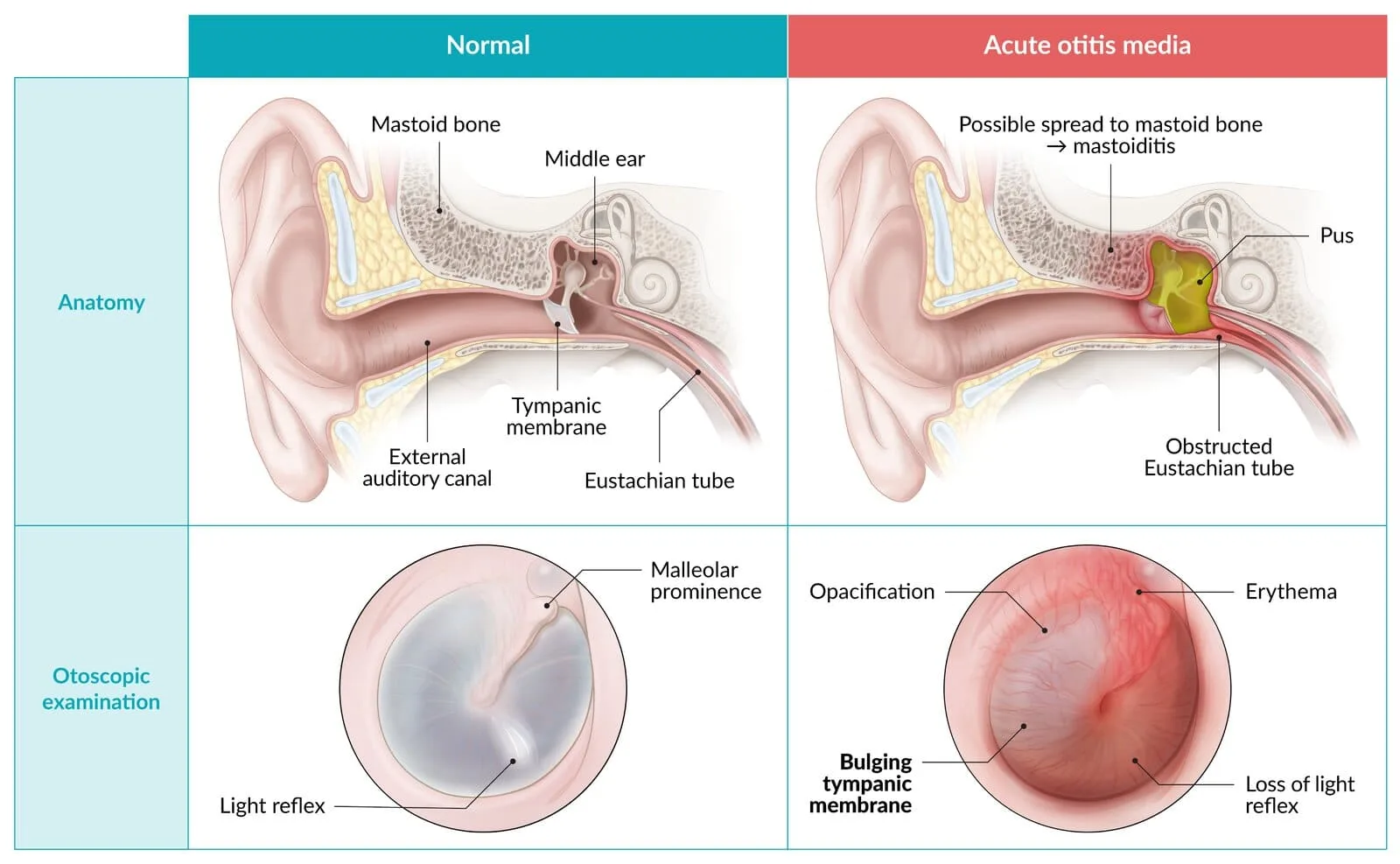
The middle ear is the space behind the eardrum, connected to the nose through the Eustachian tubes. When these tubes become blocked – usually during a cold or an upper respiratory tract infection – secretions remain trapped and create an ideal environment for bacteria or viruses to multiply.
Causes (aetiology)
- Viral infections (often precede otitis): cold viruses, influenza, etc.
- Bacterial infections:
- Streptococcus pneumoniae
- Haemophilus influenzae
- Moraxella catarrhalis
Risk factors
- Young age (most frequent in children aged 6 months – 3 years)
- Nurseries and enclosed environments with many children
- Exposure to tobacco smoke
- Bottle feeding in a lying position
- Enlarged adenoids
- Family history of ear infections
Main symptoms
- Severe ear pain (especially at night)
- High temperature (38–40°C)
- Difficulty sleeping, irritability and frequent crying in children
- Temporary hearing loss (a feeling of a “blocked” ear)
- Discharge from the ear if the eardrum perforates (otorrhoea)
- Loss of appetite and vomiting (especially in young children)
How is acute otitis media diagnosed?
- Otoscopic examination: the doctor inspects the eardrum for inflammation, redness or fluid behind it
- In some cases: tympanometry (measures the pressure in the middle ear)
- The diagnosis is usually based on the symptoms and the clinical findings
Treatment of acute otitis media
🔹 Symptomatic treatment:
- Paracetamol or ibuprofen for pain and fever
- A warm compress (warm water wrapped in a cloth) placed over the ear can ease the pain
🔹 Antibiotics:
- Not every case requires an antibiotic
- In children >2 years of age with mild symptoms, “active observation” for 48–72 hours may be applied
- When antibiotics are necessary, the usual prescriptions are:
- Amoxicillin (first choice)
- In case of allergy: azithromycin or cefixime
🔹 Surgical treatment:
- In recurrent cases (chronic otitis) or with persistent effusion: insertion of ventilation tubes (grommets) to help equalise the pressure and drain the fluid
Possible complications
- Perforation of the eardrum
- Otitis media with effusion (fluid remaining after the infection)
- Temporary hearing loss
- Mastoiditis (infection of the bone behind the ear)
- Delayed speech development in children with frequent ear infections
How can otitis media be prevented?
- Breastfeeding during the first 6 months
- Avoiding exposure to tobacco smoke
- Rinsing the nose with saline solutions during a cold
- Vaccination (for example against pneumococcus and influenza)
- Consulting an ENT specialist in case of adenoid problems or recurrent infections
✅ Conclusion
Acute otitis media is a very common and often harmless condition, but one that requires careful attention, particularly in young children. Appropriate treatment and following the doctor’s recommendations are the key to preventing complications and protecting hearing.
📌 Advice for parents: If your child has ear pain, a fever or does not respond well to sound, do not wait – consult a doctor in order to avoid possible complications.